← Back to Research

From Camping to Product Designs

Tent, phone stand, and hammock designs inspired by time outdoors.

MY ARMS GOT TIRED FIRST.

Hammock Ridgeline Phone Holder

I spend a lot of nights hammock camping, and one small annoyance kept coming back: watching a video meant holding my phone above my face the whole time. A hammock is supposed to be relaxing. My arms disagreed.

I looked at hammock phone holders already out there. Some used bulky plastic parts—one more thing to pack, carry, and eventually forget. Others hung the phone inside a clear plastic pouch, which worked, but put a layer of plastic between me and the screen. I wanted something smaller, simpler, and easy to leave on the hammock all the time.

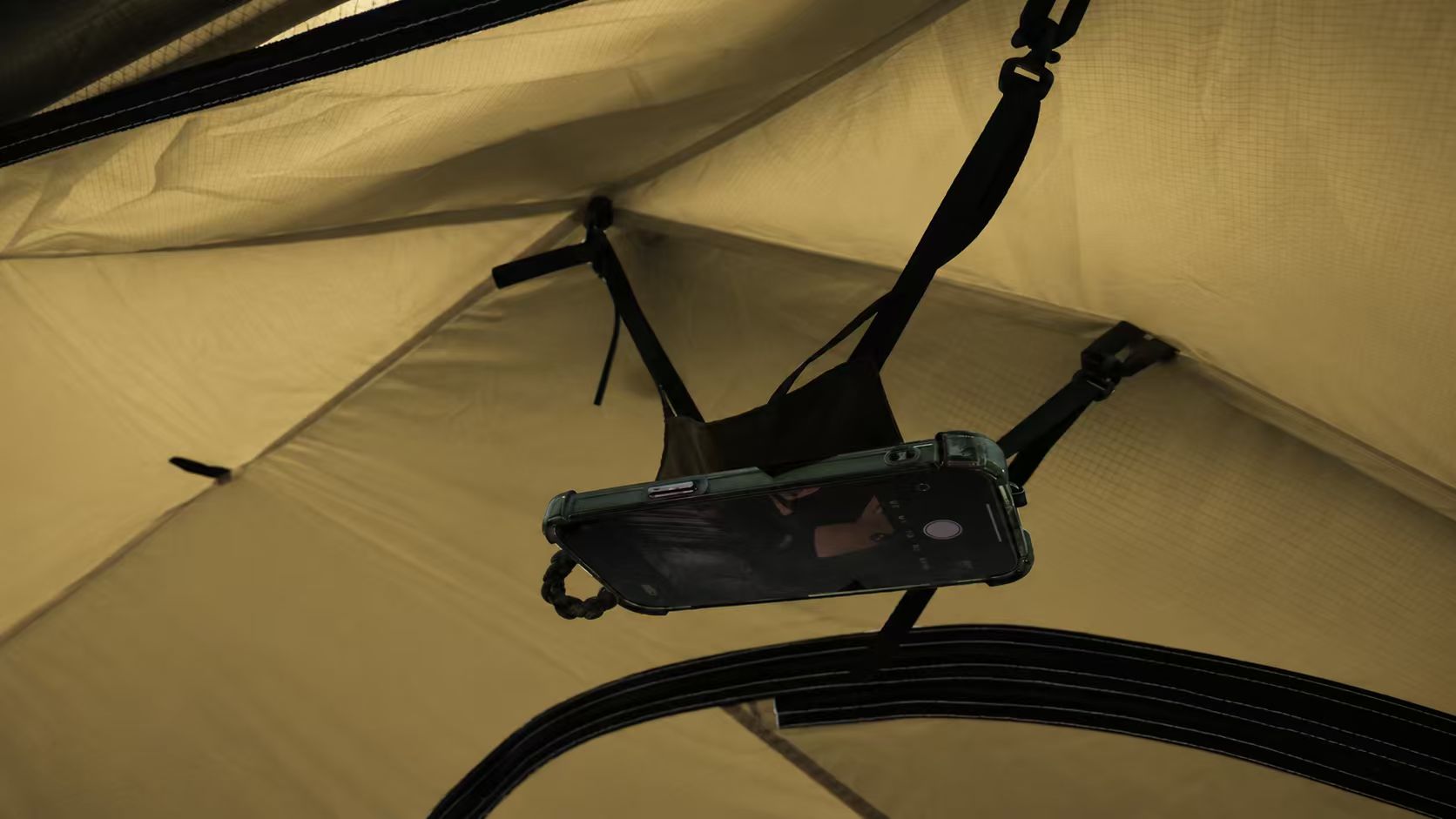
My solution uses magnets to hold the phone and four adjustable webbing straps to suspend it from the hammock ridgeline. By changing the length of the straps, I can adjust both the position and angle of the screen, whether I’m lying on my back or turning to one side. When I’m done, it simply stays on the hammock. It’s small enough that I never need to take it off—which also means I can’t forget it on my next trip.

The finished design was granted a China Design Patent: ZL 2024 3 0832830.5.
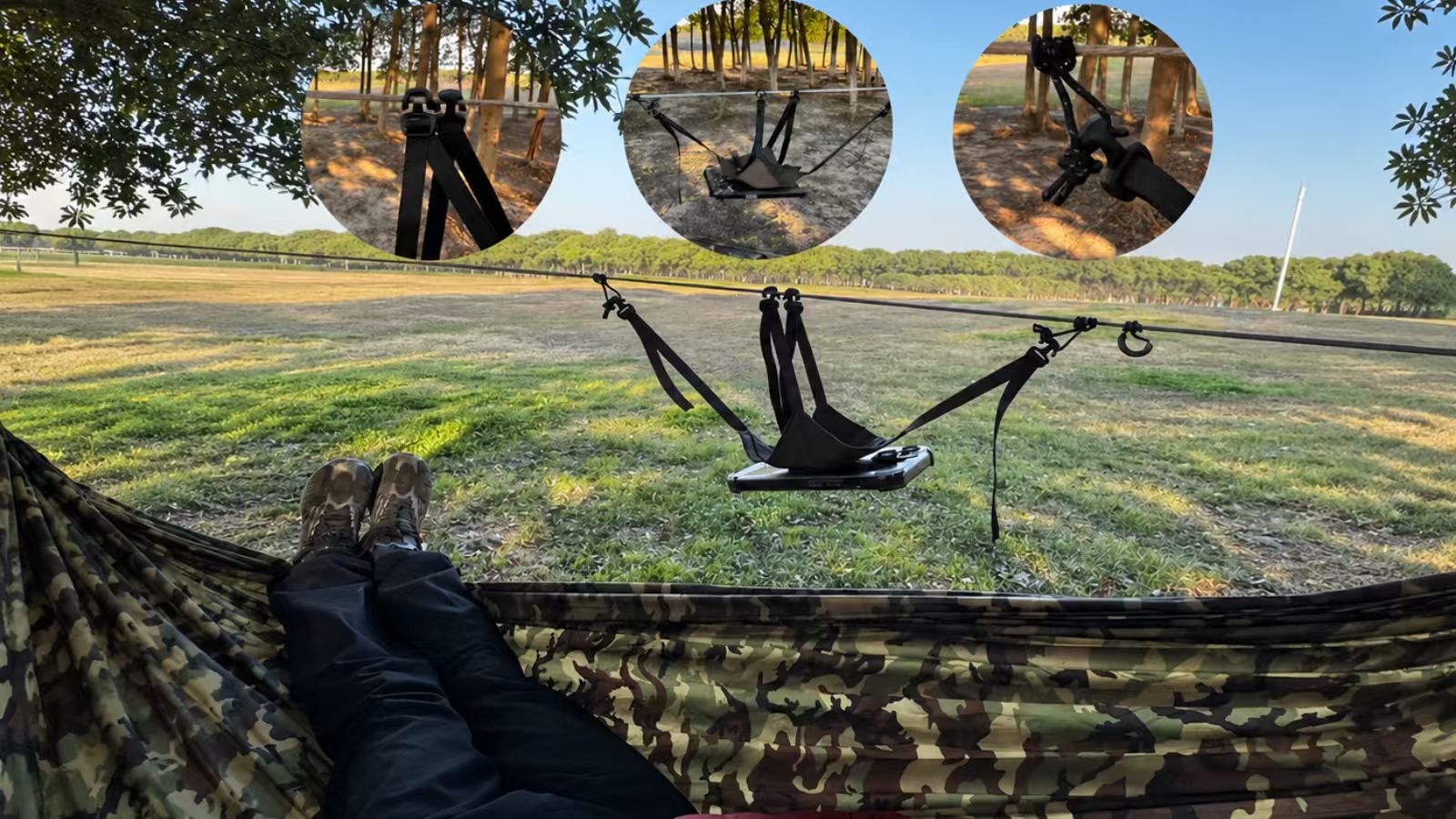
A phone holder suspended from a hammock ridgeline, viewed while lying in the hammock
On the hammock ridgeline
The adjustable phone holder used inside a tent
Inside a tent

MY SISTER LOVED IT. SO DID THE MOSQUITOES.

Tripod Hammock Bed with Mosquito Net

My sister loved the tripod hammock bed. She could climb in, stretch out, read, and happily stay there for hours. Unfortunately, the mosquitoes seemed just as excited about it. A tent has walls. A camping hammock can have a bug net. Our tripod hammock bed had…nothing.

So I went looking for a mosquito net that could work with it. I searched around, but couldn’t find anything designed for a freestanding hammock bed like ours. Apparently, this was a problem I was going to have to solve myself.

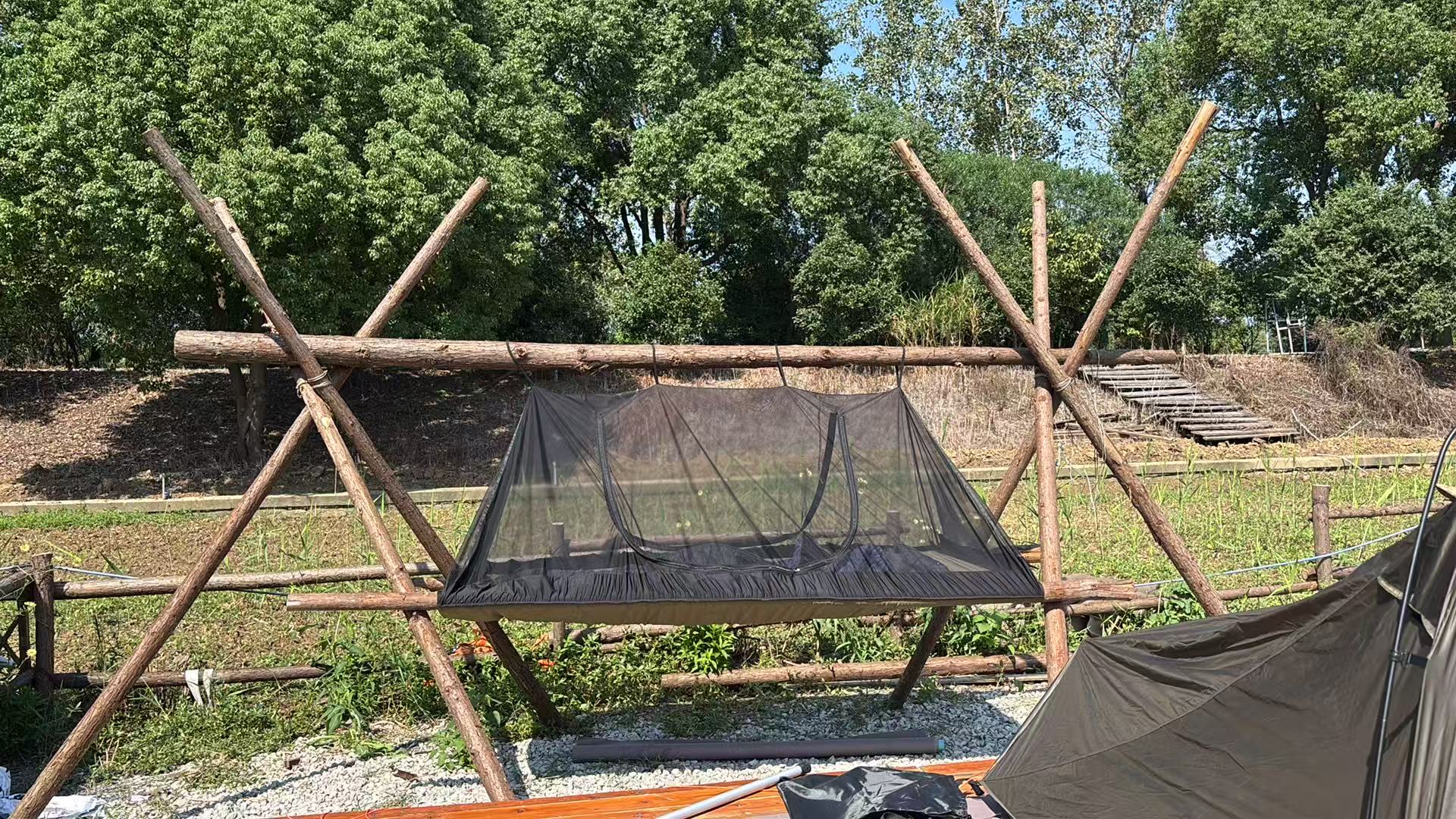
I designed a full mesh enclosure around the bed, with enough room inside to sit up, lie down, and move around comfortably. Suddenly, our open hammock bed became a little bug-free room in the woods.

My sister got her hammock bed back. The mosquitoes were no longer invited.

The freestanding tripod hammock bed inside a fitted mesh enclosure
A mosquito net for our hammock bed

SHE WANTED TO SEE WITHOUT BEING SEEN.

Hide-and-Seek Tent

When my sister was little, she loved playing hide-and-seek outside with her friends. One day she announced that the perfect hiding place would let her see everyone looking for her—while they couldn’t see her. Basically, she wanted an unfair advantage.

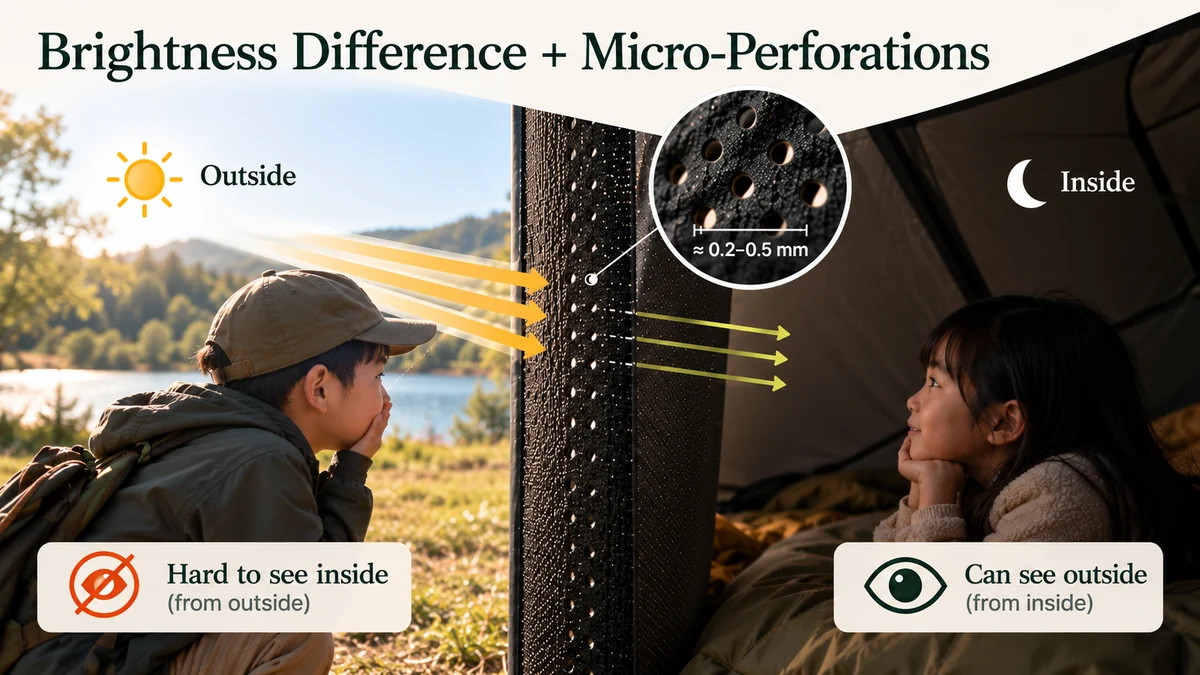
That gave me an idea. I remembered those funny pinhole glasses covered with tiny holes: you can still see through them even though most of the surface is blocked. Could I do something similar with a tent?

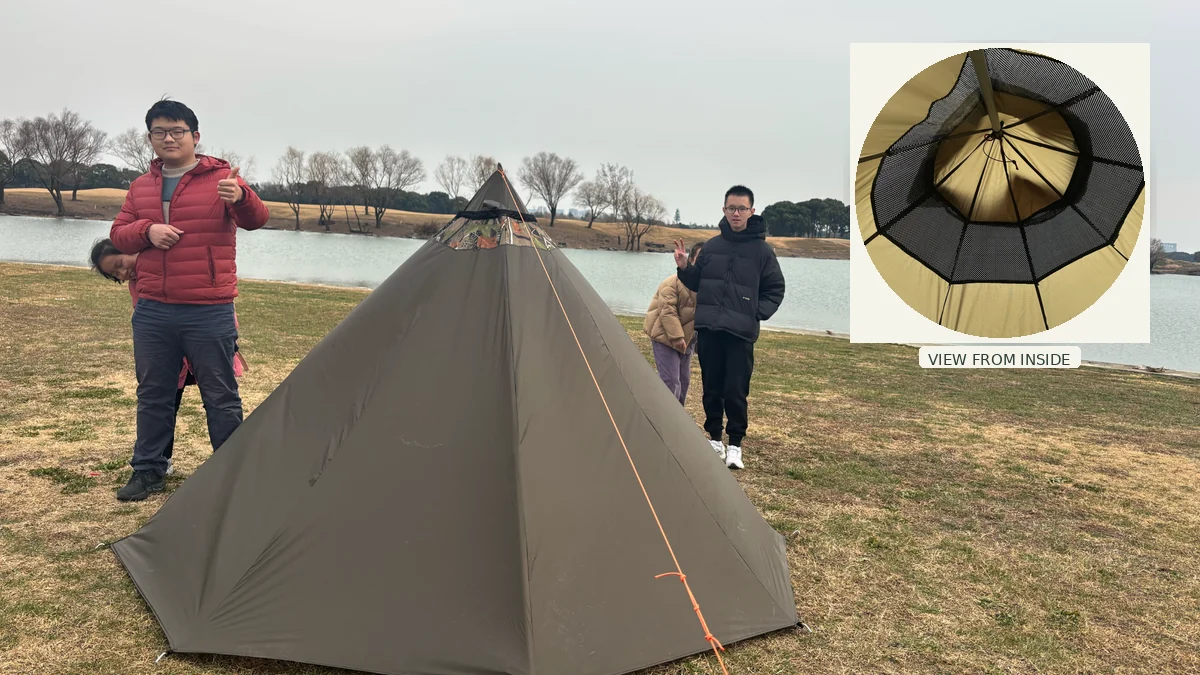
Luckily, fabric is one thing I’ve never had trouble finding. My dad works with textiles, so I’ve grown up around all kinds of materials. I started looking for one that could create the effect I wanted, and eventually built a dark perforated band around the upper part of the tent. From the darker inside, my sister could look through the tiny openings and keep an eye on everyone outside. From the brighter outside, it was much harder to see her hiding inside.

The result was probably not a very fair hide-and-seek tent. My sister didn’t seem to mind.

Hide-and-Seek Tent outdoors, with an inset showing the view from inside
View photo
Illustration of the brighter outside, darker inside, and micro-perforations behind the Hide-and-Seek Tent design
How it works · Brightness difference & micro-perforations

One-Side Pole Teepee Design

THE PROBLEM

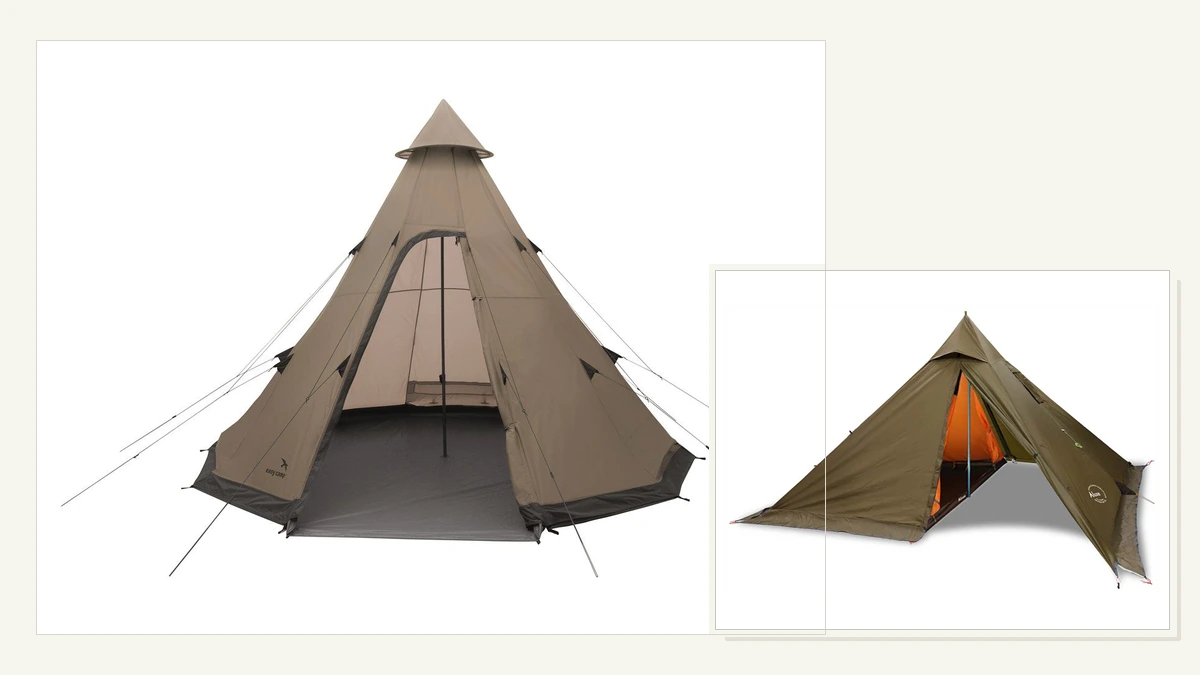
Traditional teepee tents rely on a central support pole, but that pole creates several practical problems. It concentrates pressure on one spot on the floor, pushes the sleeping area to one side and leaves interior space poorly distributed, and often gets in the way near the inner-tent entrance.

Traditional teepee tent showing the central support pole inside the sleeping area.
Existing center-pole layout
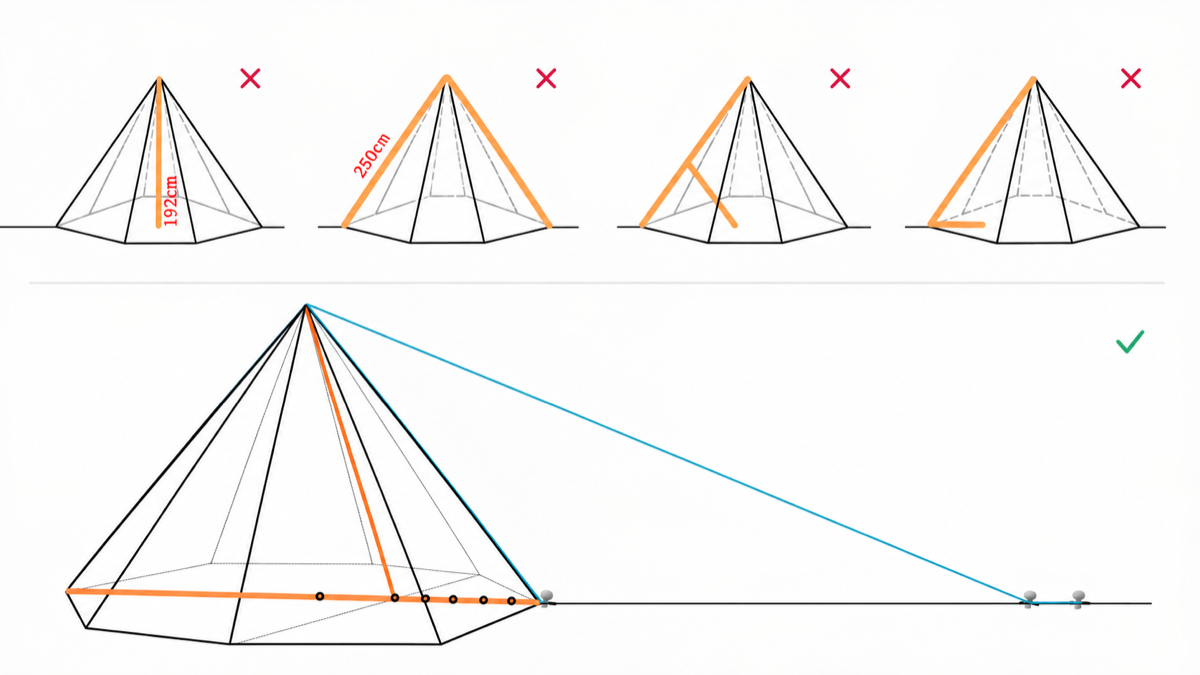
Diagram comparing support-pole alternatives and the final guyline and ground-strap arrangement.
Alternative layouts and the guyline solution

THE IDEA

What if I moved the pole out of the way?

I first explored several alternatives—two angled poles, an A-frame-like structure, and an L-shaped support. They removed the center pole, but added too much pole length, weight, or complexity.

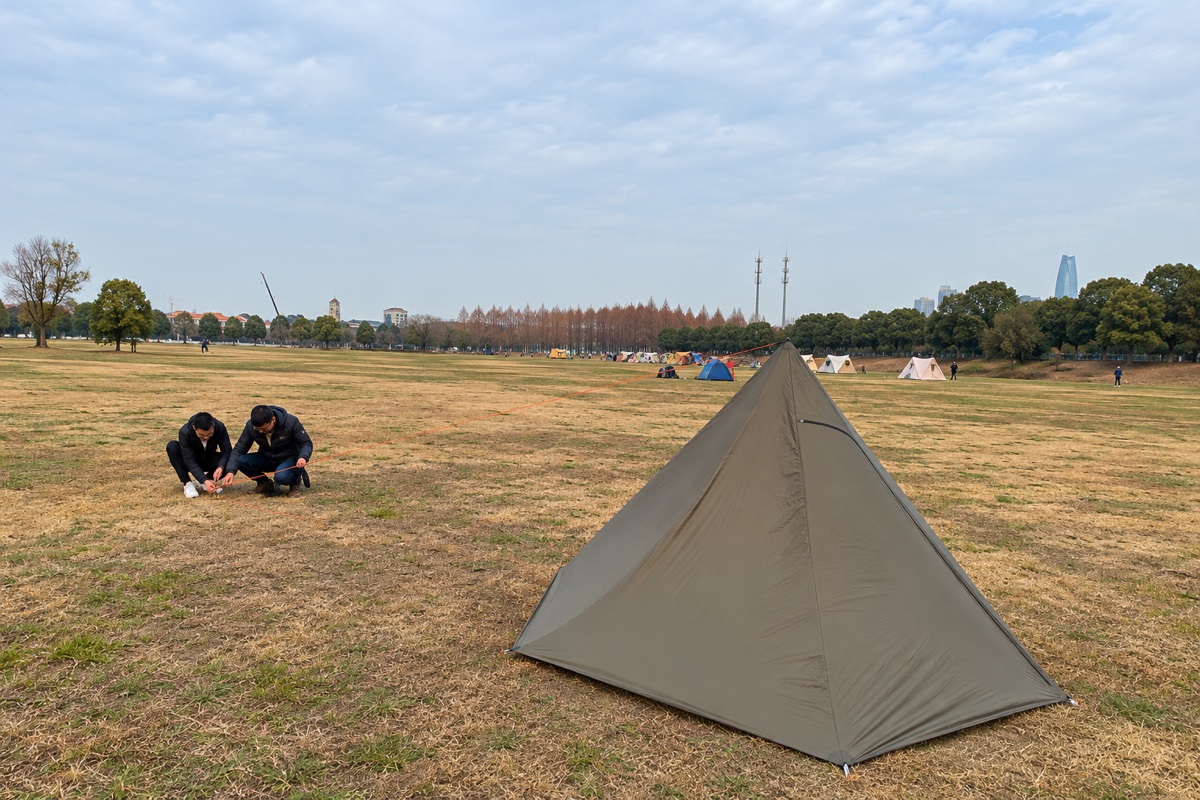
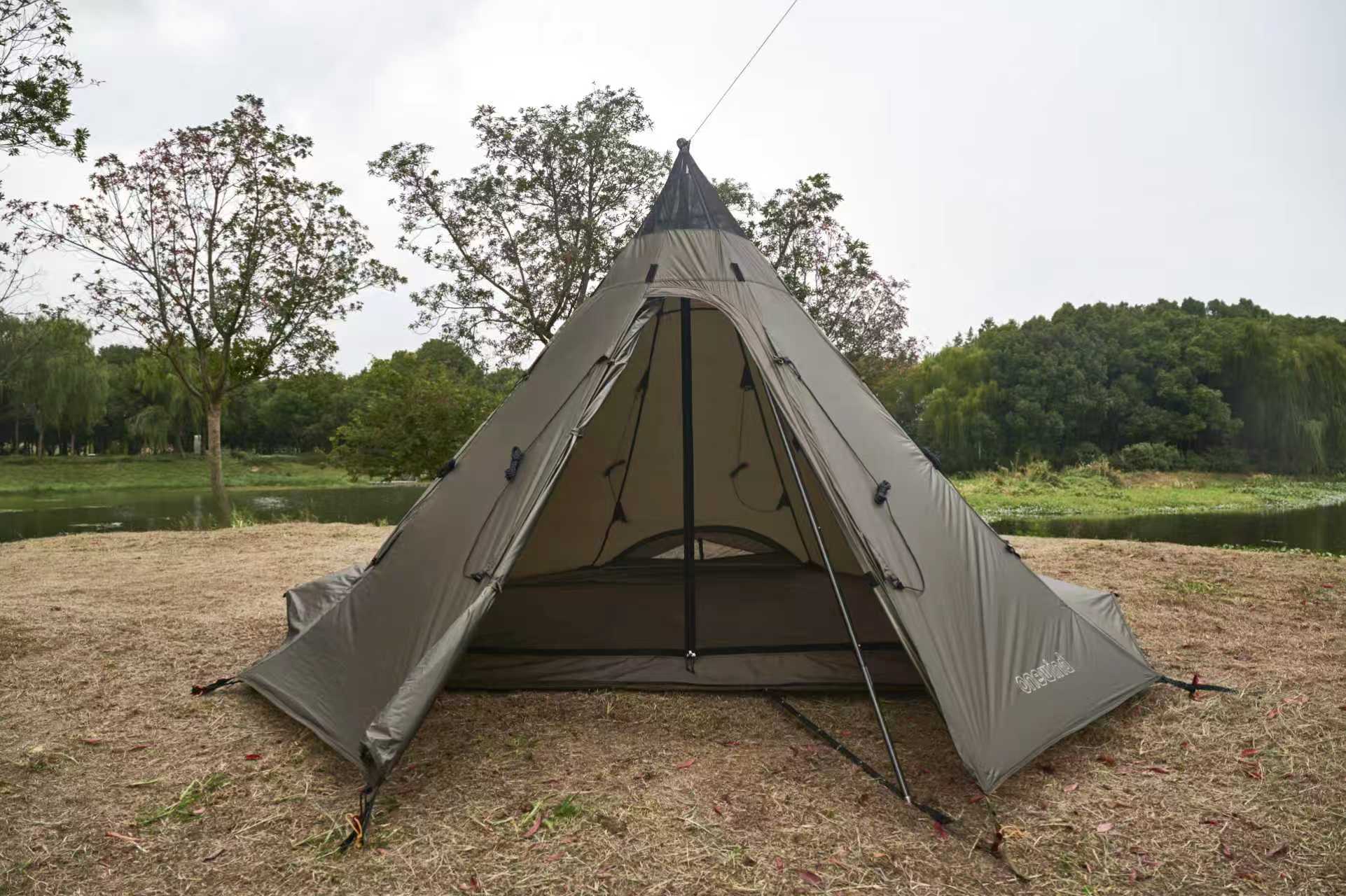
Eventually, I tried something simpler: move the original pole to one side and stabilize it with tension rather than adding more poles. A guyline pulls outward from the top, while a webbing strap across the ground fixes the bottom of the pole in position. Multiple positioning points on the strap allow the pole placement to be adjusted while keeping it from slipping.

THE RESULT

One pole. Just not in the middle.

Removing the center pole opens up the most useful part of the tent and gives much more freedom in arranging the sleeping area. Because the interior space can be used more efficiently, the overall tent can also be made smaller without shrinking the sleeping area.

GERMAN UTILITY MODELDE 20 2025 100 026 · Improved Tower Tent Structure

← Back to Research