Writing science fiction has been part of my life for years. I write because I enjoy building a world, following an idea, and seeing where a question leads me.
Now AI can generate a story in seconds. I still like writing mine slowly. The part I value most was never just the finished story. It is the time spent thinking, imagining, changing my mind, and slowly finding out what I want to say.
Some of these stories are rough, especially the ones I wrote when I was younger. I don't know if any of them will ever become something meant for publication. But they are part of my memory—records of the worlds I imagined and the questions I was thinking about at different ages.
FEATURED WORK
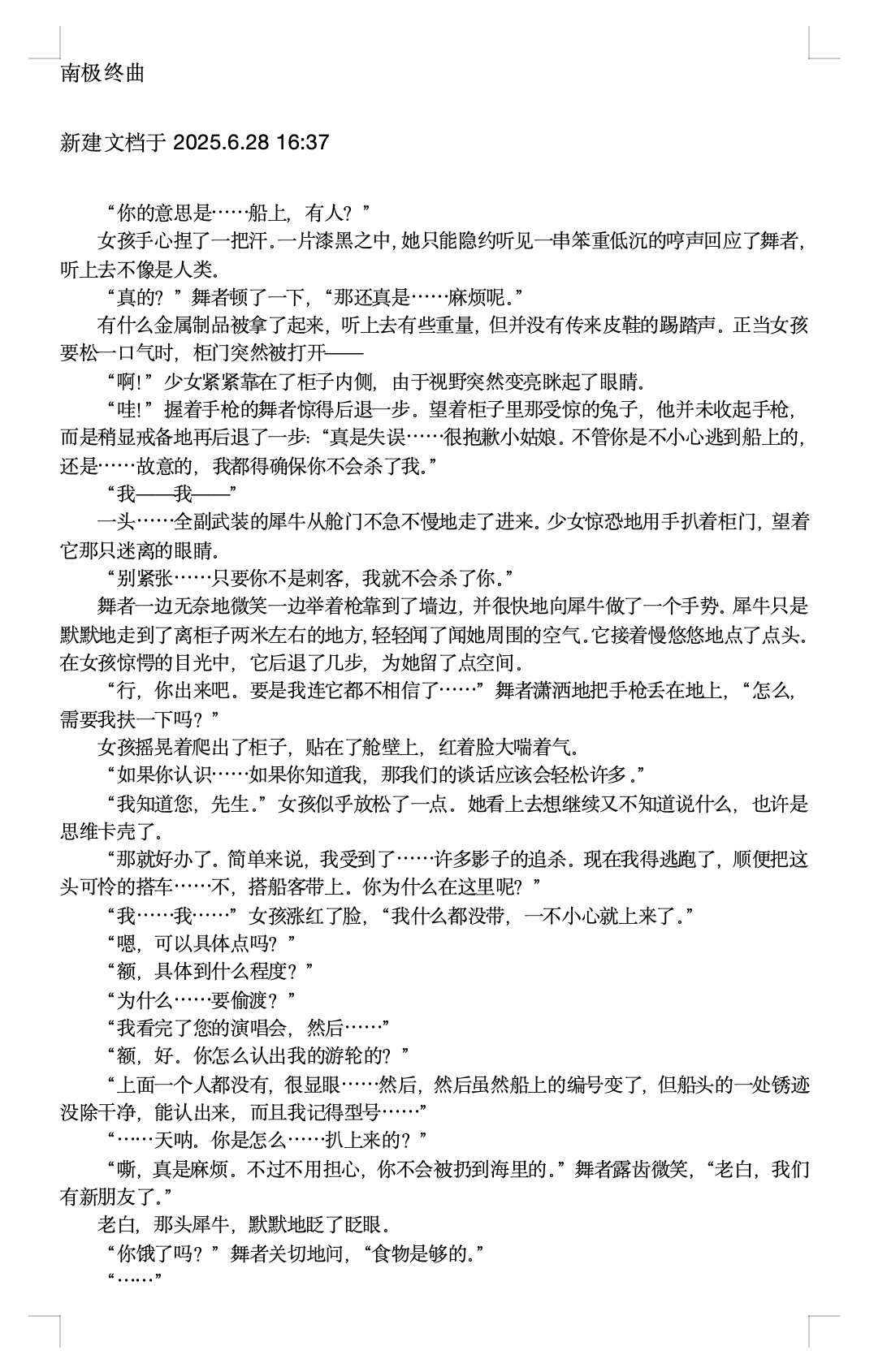
The Antarctic Finale 南极终曲
Science-fiction story · 20K+ Chinese characters
A teenage girl secretly boards the yacht of an aging dancer on his final journey to Antarctica. With them is Lao Bai—the last southern white rhinoceros in the world.
What begins as a strange journey through a disappearing world gradually becomes a story about death, memory, and what remains after someone is gone.
Icarus grows up beneath a drifting city, where people live in terrible conditions yet remain perfectly happy. Before undergoing the “baptism” that awaits everyone at sixteen, he leaves the world below and sees the sun for the first time.
What begins as a story about freedom gradually becomes a harder question: what if happiness, choice, and survival cannot all exist at once?
In a future shaped by biotechnology, animals with human-level intelligence form the Bio-League after years of exploitation.
A captured human scientist is forced to confront a difficult reversal: if humans have no right to dominate other species, what happens when the oppressed gain power—and begin repeating the same logic themselves?
In middle school, I became obsessed with science fiction, especially Liu Cixin and The Three-Body Problem. On weekends, I would sometimes stay in bookstores reading until it was dark and my parents came looking for me. Eventually, reading wasn’t enough. I started writing stories of my own.
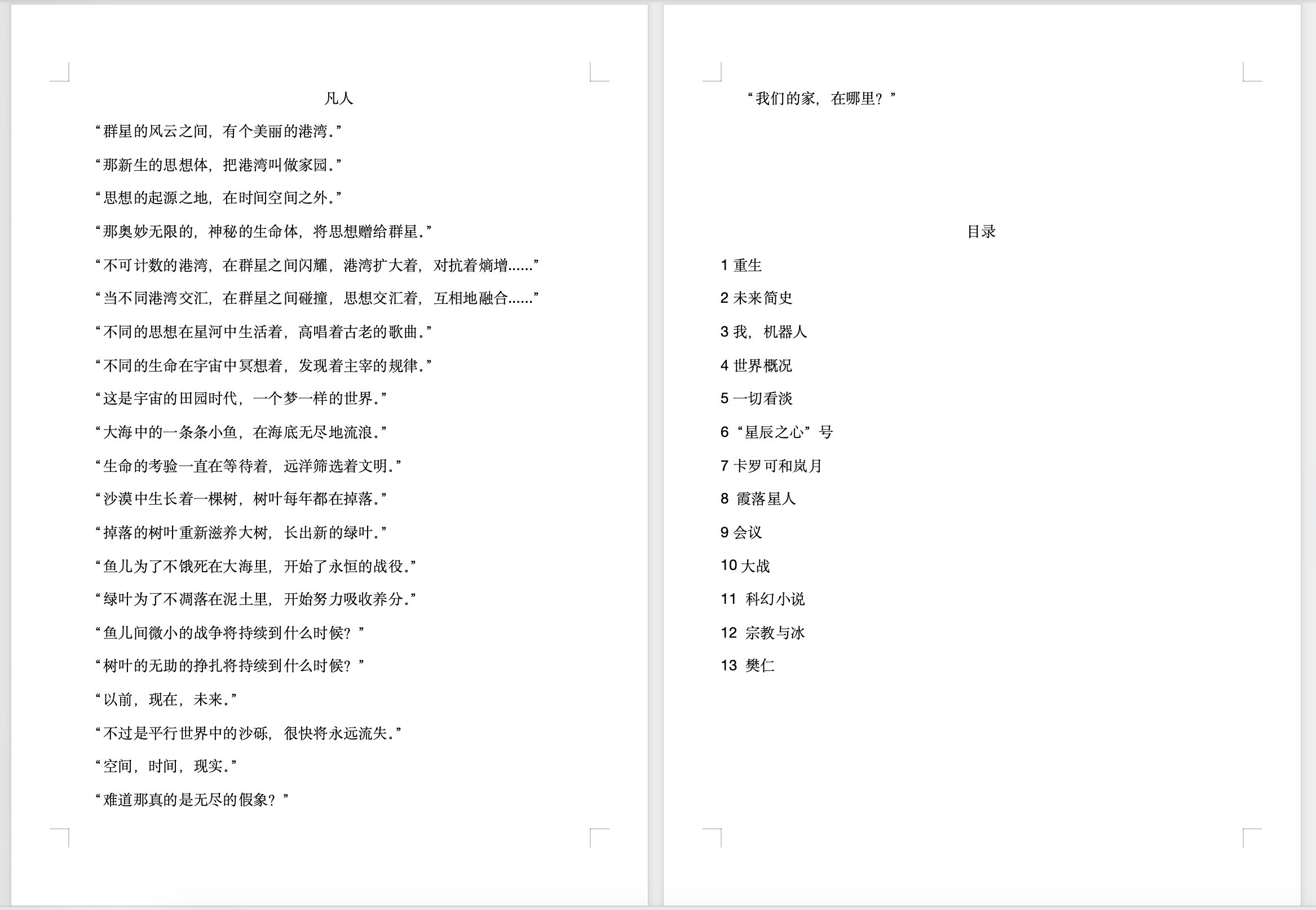
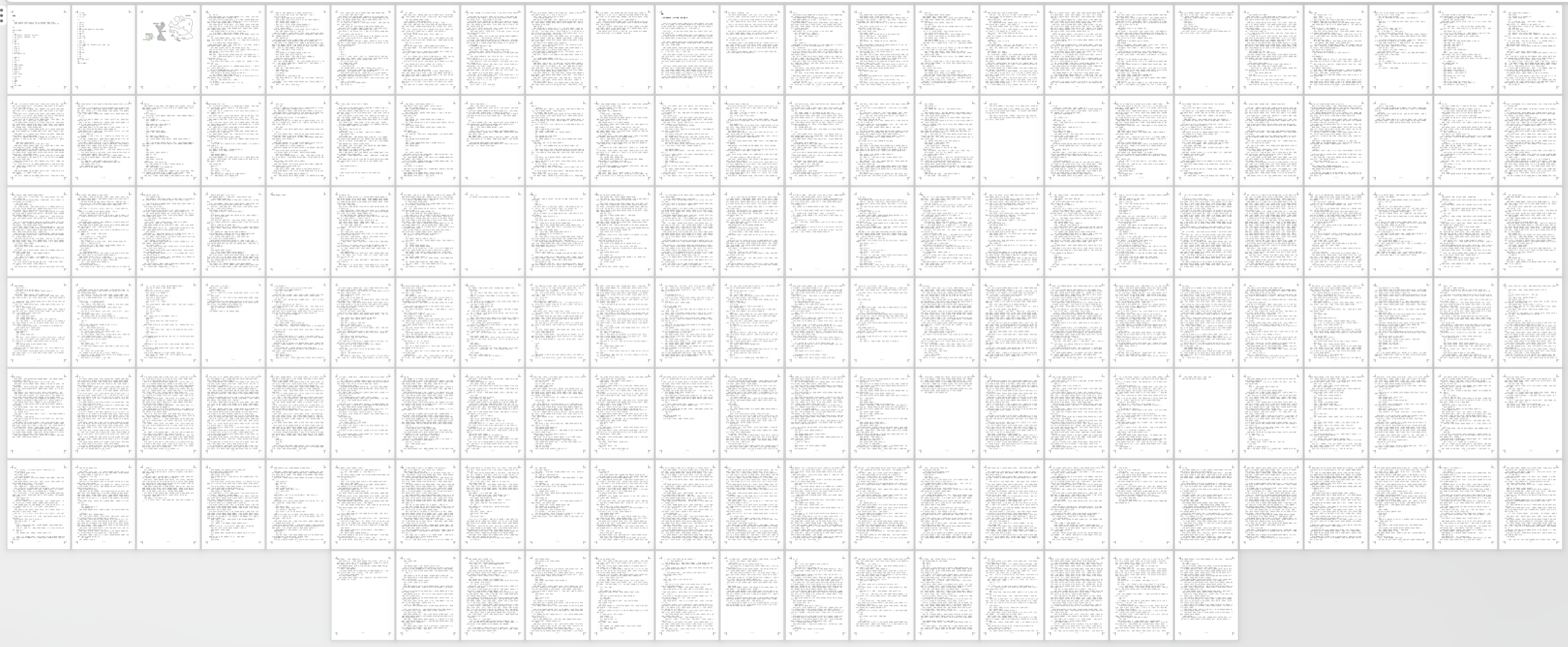
凡人 was one of my earliest attempts at a long story. I was clearly borrowing from what I loved at the time—the neat, parallel sentences at the beginning were my attempt to imitate the rhythm of The Three-Body Problem. From there, the story wandered into interstellar civilizations, artificial minds, virtual lives, and humans gradually becoming machines.
I was interested not only in what those technologies might mean for people, but also in how they might actually work—how machines could think, how humans might connect with them, and what kinds of systems could make an imagined future civilization possible. I did not have much technical knowledge then, so most of my answers were speculation. But the questions themselves stayed with me.
But it was the first time I tried to build a world of my own.
The writing feels very middle-school to me now.The questions, strangely, still don’t.
Original preface and table of contents · Click to enlargeThe complete 86-page manuscript, written in Chinese.
FROM STORY TO WORLD
时空使
I wrote 时空使 when I was still in middle school. By then, writing science fiction had become one of the ways I explored whatever I happened to be curious about—physics, technology, history, society, and sometimes questions I didn’t really know how to answer.
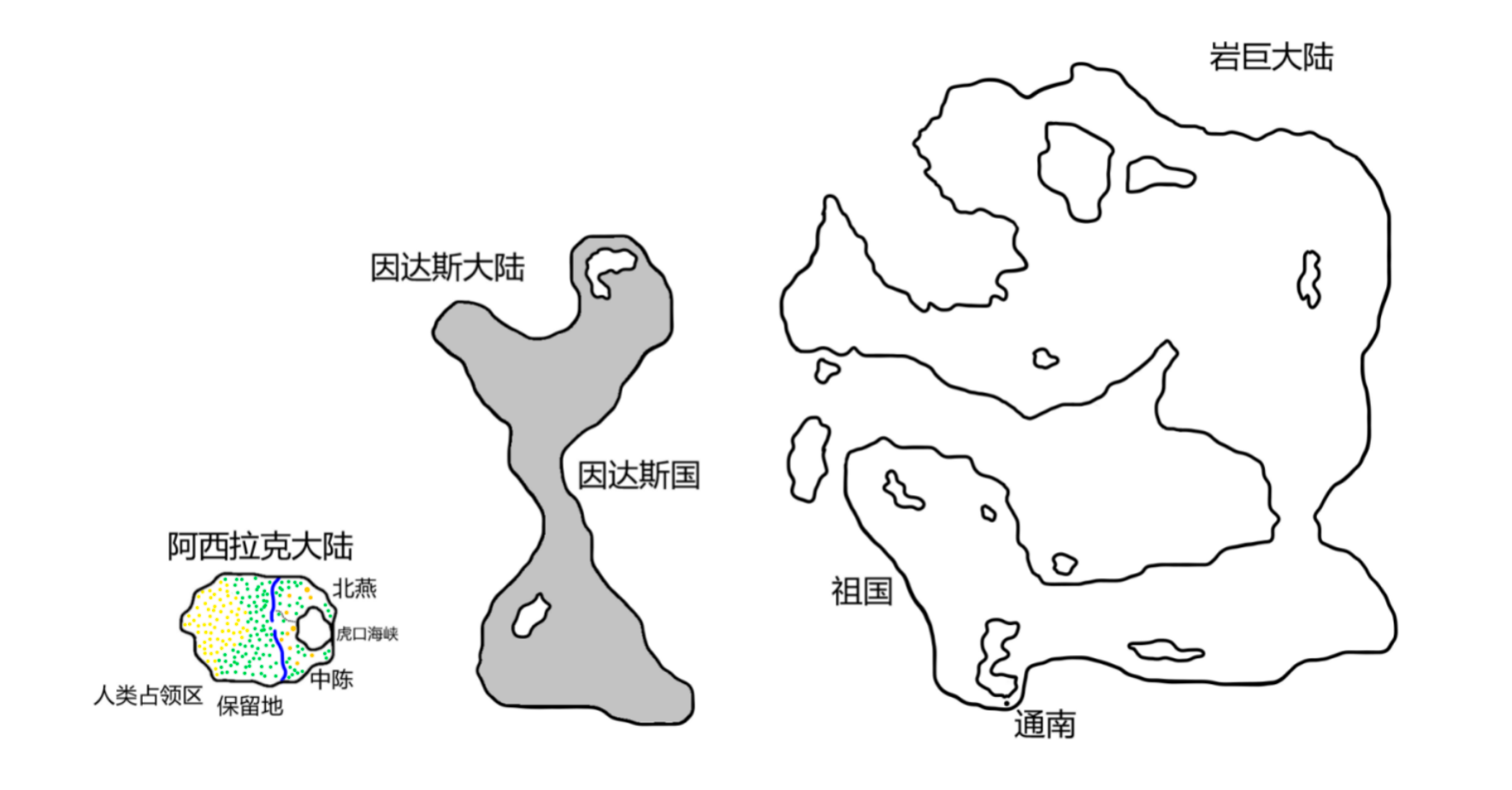
The story takes place in an alternate world inhabited by “Space-Time Users,” people with unusual abilities connected to time, space, and physical forces. I built continents, civilizations, religions, wars, and histories around them, then followed the characters across different societies and conflicts. Physics, history, politics, and whatever else I happened to be reading about kept finding their way into the story.
Once I gave the characters abilities tied to time, space, and physical forces, I also had to decide what those abilities could and could not do. I wanted the world to have its own rules, even if my middle-school understanding of the physics was still pretty loose.
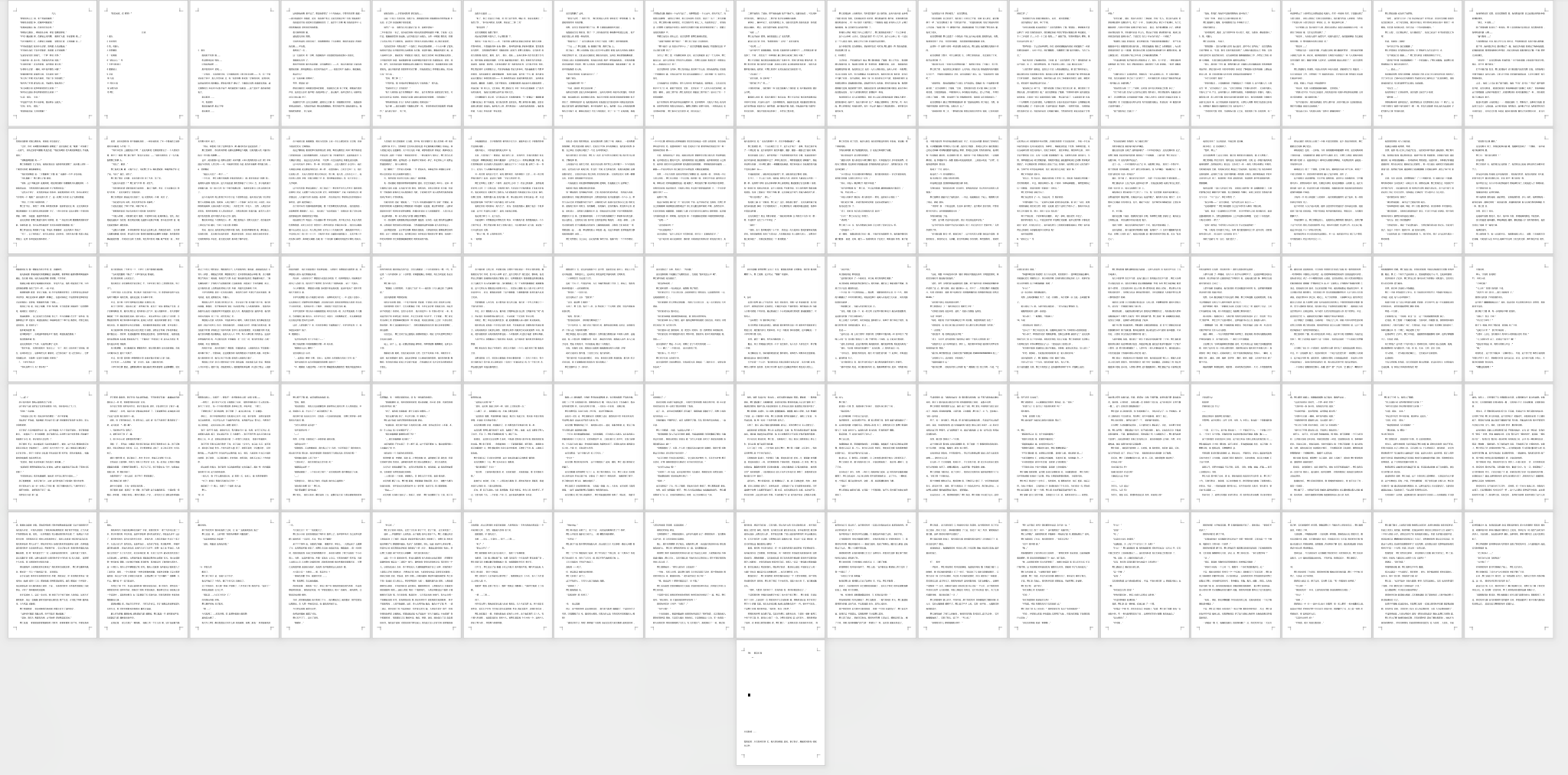
It eventually grew to more than 150 pages. Looking back, some parts feel very much like something my middle-school self would write. But I still like how seriously I took the world I was building.
“This is the author’s first novel, and perhaps his last.”— from my middle-school prefaceThat last part makes me smile now.
World map from the original manuscript · Click to enlargeTHE COMPLETE MANUSCRIPT More than 150 pages. One very long middle-school obsession.